

You reach for the salt shaker at breakfast, but nothing comes out onto your eggs. A familiar sight inside diner shakers points to a surprisingly simple reason yours might be stuck.
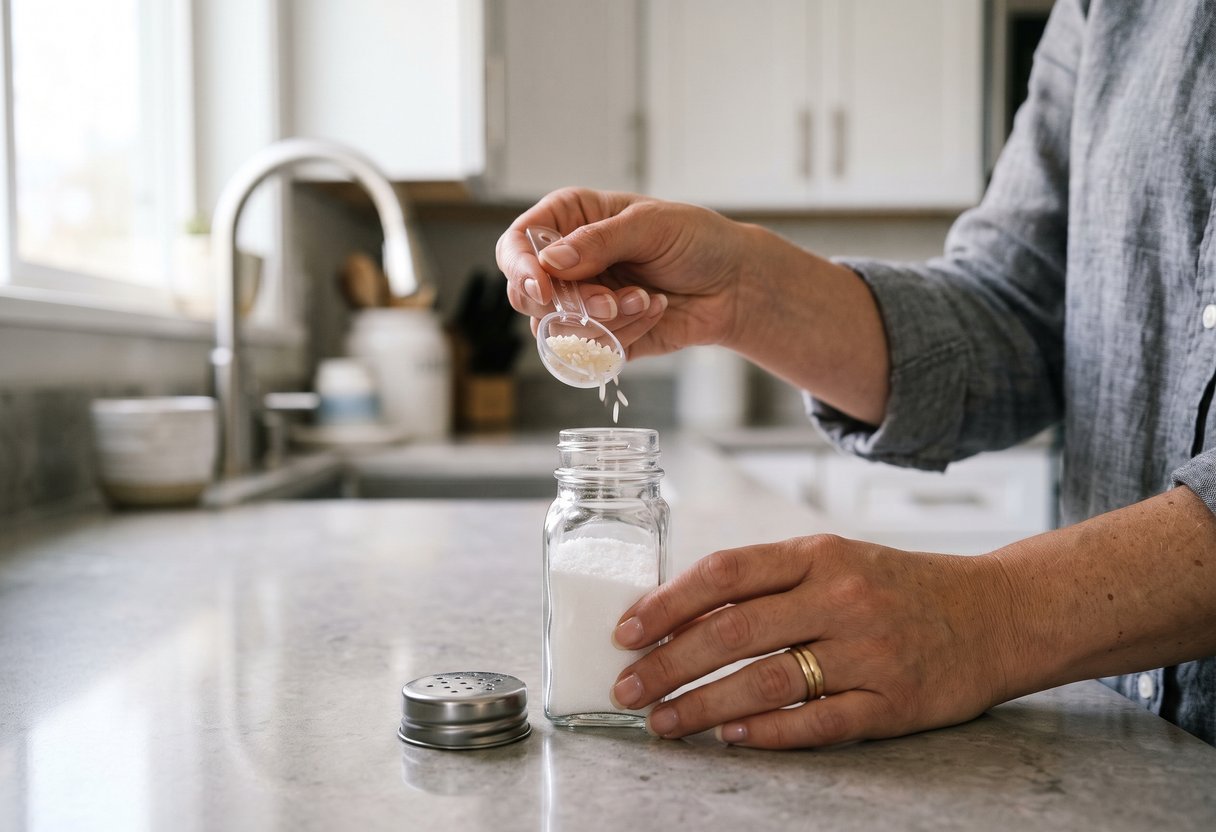
After a pot of pasta sends steam across the kitchen counter, the salt in a nearby shaker pours in fits and starts. Tapping the shaker may loosen a clump, but the next pour can be just as uneven. The extra grains tucked inside many diner shakers point to a simple reason for that difference.
Rice helps keep salt moving through a shaker
Restaurants put uncooked rice in salt shakers to reduce clumping, not because the grains fell in by accident. The rice absorbs some moisture that might otherwise make the salt stick together, helping it pour through the shaker’s small holes.
- Seven things in your kitchen that hydrogen peroxide cleans better than bleach
- Your microwave has a wattage printed inside the door, and every cook time on a frozen box assumes a different number
Table salt absorbs water vapor from the air. Moisture slightly dissolves the surfaces of salt crystals, which can then stick together as the moisture changes. Even a small hardened clump can block a shaker hole. Humid weather makes this more likely, but steam from cooking can cause trouble in a drier home, too.
Rice absorbs some moisture without dissolving
Uncooked rice also absorbs moisture. Because it is mostly starch, it does not dissolve and cling to the salt the way damp salt crystals cling to one another. Food scientist Dr. Bryan Quoc Le explains that rice can take up some moisture before it affects the salt.
The grains also move through the salt when the shaker is used, which may help break apart small clumps. Rice is a partial fix, though, not a barrier against all humidity. It works best when the shaker and the salt are dry to begin with.
White long-grain rice is the practical choice
For a standard-sized salt shaker, add about 1/2 teaspoon of uncooked white long-grain rice to a dry, empty shaker. Fill the shaker with salt, close it, then give it a gentle shake to distribute the grains. The rice should stay inside while the salt passes through the holes.
White rice is preferable to brown rice because removing the bran exposes more starch to moisture in the air. Long-grain rice is less likely than smaller grains to fall out with the salt. The amount need not crowd the shaker: a few grains moving freely can do more good than a tightly packed shaker that is hard to pour.
Dry storage matters more in persistent humidity
Rice cannot keep up with a shaker that stays damp, particularly one left beside a steaming stove or in a persistently humid spot. Keep the shaker away from cooking steam, and store the rest of the salt in a dry, airtight container. If salt has hardened enough to block the holes, empty and dry the shaker before refilling it with dry salt and fresh rice.
Dried beans or small pasta can serve a similar purpose if their pieces are too large to pass through the holes. Food-grade desiccant packets can absorb moisture, but they are less convenient in a shaker used at the table; keep packets intact and away from children and pets. For everyday use, start with a dry shaker, add the rice, and put it back in a dry spot after meals.





Leave a Reply