

Gray lines between your kitchen floor tiles can make the whole room look dirty, even after you mop. Before you spend another afternoon scrubbing on your knees, there’s a simpler approach worth knowing.
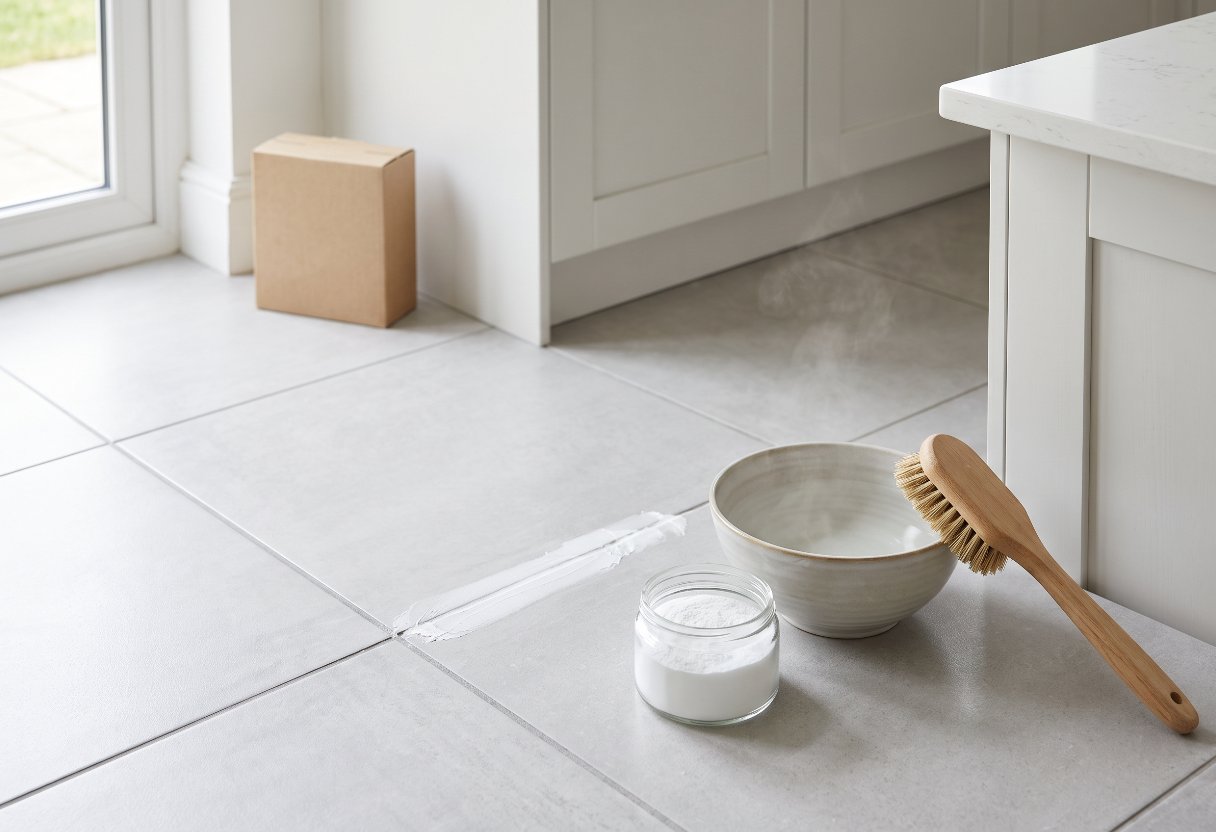
Halfway through brushing the grout beside the stove, the toothbrush bristles are dirty and most of the floor is still untouched. Scrubbing one narrow line at a time takes a while, and darker patches can remain after the surface dirt lifts. A less labor-intensive approach can help, though it will not eliminate brushing altogether.
Oxygen bleach loosens stains in kitchen grout
Oxygen bleach powder can clean gray kitchen floor grout with less scrubbing. Mixed with water, it releases oxygen that helps loosen stains in the grout lines before a brush lifts away the remaining grime. It is usually sold as a laundry stain remover or booster, so the powder may already be in the laundry room.
- Neither baking soda nor steel wool, the way to get burnt-on grease off the bottom of a pot without scratching it
- Instead of Roasting a Whole Turkey for Thanksgiving, Put Turkey Legs in the Air Fryer for 45 Minutes
The powder contains sodium percarbonate, a compound that releases oxygen when dissolved in water. Unlike chlorine bleach, oxygen bleach is generally suitable for both white and colored grout because it is less likely to strip dye. It still needs a small-area test before use, especially on older grout.
Porous grout holds onto kitchen grime
Cement grout has tiny openings that trap dirt, oils and residue from cleaning products. Spills and foot traffic add to that buildup, making kitchen grout look gray even when the surrounding tile looks clean. Hard-water minerals can also leave a dull deposit.
Moisture that lingers in grout lines can contribute to mildew and mold. Cleaning may remove visible discoloration, but it will not correct a persistent moisture problem. If the same area darkens again quickly, check where water is collecting and dry the floor after spills.
Warm water gives the powder time to work
First, sweep or vacuum loose debris so it does not spread across the wet floor. Mix oxygen bleach powder with water at 104 to 140°F (40 to 60°C), using the powder-to-water amounts on the product’s grout-cleaning directions. Cold water slows the oxygen-releasing reaction; do not substitute a laundry-load dose for grout instructions.
Test the mixture on an inconspicuous grout line, then brush or pour it onto the grout without flooding the surrounding floor. Let it sit for 10 to 20 minutes. For heavy, long-standing buildup, instructions may call for 30 to 60 minutes, but check the product directions and do not let the mixture dry on the floor.
After soaking, use a grout brush or old toothbrush with light pressure to lift the loosened dirt. The soak reduces the need for forceful scrubbing; it does not eliminate the brush step. Finish with a thorough clean-water rinse and wipe the area dry so residue and loosened dirt do not settle back into the grout. These steps follow the basic sequence for cleaning grout with a brush.
Damaged grout needs a different fix
Do not mix oxygen bleach with chlorine bleach, vinegar, ammonia or other cleaners. Keep children and pets away from the powder and wet floor, and follow the product label for handling and surface restrictions. Rinse away any previous cleaner before starting.
Oxygen bleach works best on mild to moderate discoloration, not missing grout or stains that remain after cleaning. If grout is crumbling or severely stained, have it assessed for professional cleaning or replacement rather than scrubbing harder. For routine upkeep, remove spills promptly and dry wet grout lines before grime has another chance to settle in.





Leave a Reply