

After dinner, the bottom of your favorite pot is coated in burnt-on grease that dish soap barely touches. Scrubbing harder risks scratches, so how do you get the dark layer off?
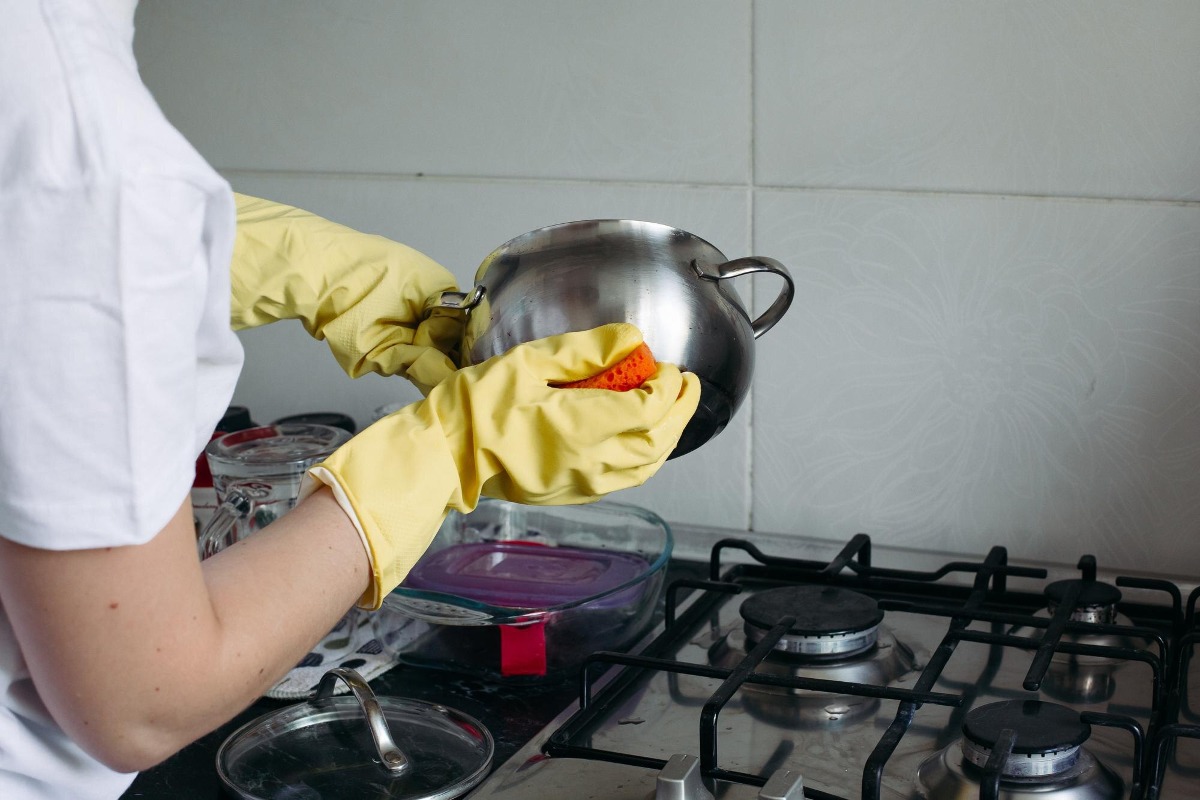
As a pot goes back into the cabinet, its underside leaves a brown smudge on a clean dish towel. Another pass with dish soap may lift loose oil, but the heat-baked layer remains. Steel wool can scrape it off, though it may leave marks on a smooth finish. A change in the cleaning sequence can make the stubborn layer easier to remove without scrubbing harder.
Bar Keepers Friend can lift burnt grease without steel wool
For burnt-on grease on a pot bottom, use Bar Keepers Friend powder as a short-contact paste and scrub gently with a soft sponge instead of steel wool. Its oxalic acid helps loosen stubborn stains, while ground feldspar provides mild abrasive action; a soft sponge reduces the risk of scratches from aggressive scrubbing. The cleanser still needs care because prolonged contact or a rough pad can damage some finishes.
- Instead of Roasting a Whole Turkey for Thanksgiving, Put Turkey Legs in the Air Fryer for 45 Minutes
- Ina Garten’s rule for mashed potatoes with no lumps isn’t about the butter, it’s about the tool you never use
Heat can leave cooking oils oxidized and hardened onto cookware, so ordinary dish soap may not remove the entire layer. Boiling water can loosen residue inside a badly burnt pot before cleaning, but water boiled inside the pot will not cover grease stuck to its exterior bottom. Check where the buildup is before choosing the first step.
A short boil can loosen residue inside a pot
For residue on the inner bottom or sides of a suitable pot, add enough water to cover the burnt area, then add about 1/4 cup of white vinegar. Bring the water to a boil, reduce the heat and simmer for 20 minutes. Turn off the heat and let the pot cool before draining it; softened residue should require less pressure to remove.
Do not use the boil as a reason to scrape the pot with steel wool or metal utensils. If the burnt grease is only on the outside bottom, skip the boil and wet that area in a sink of soapy water instead. This prepares the surface for the paste without suggesting that water inside the pot can soak an exterior stain.
The cleanser needs only brief contact
Mix a little Bar Keepers Friend powder with enough water to make a paste, then spread it over the wet, stained area. Gently work it with a soft sponge or nonabrasive pad, keeping the paste on the surface for no more than 60 seconds. Rinse thoroughly with clean water, inspect the pot and repeat briefly if residue remains rather than scrubbing harder.
The cleanser’s oxalic acid content helps explain its effect on stubborn stains, but the feldspar means the powder is not abrasion-free. Test an inconspicuous spot if the finish is uncertain. Keep the cleaner away from children and pets, and rinse away the vinegar solution before applying the paste; never mix cleaning products with bleach or ammonia.
Some cookware needs a different approach
Do not use Bar Keepers Friend on bare cast iron, and check the manufacturer’s directions before putting it on nonstick cookware or an unfamiliar finish. It can be used on stains in enameled cast iron, but gentle pressure still matters. Keep the powder off quartz, marble, granite, mirrors, silver, delicate wood and leather.
If a stain remains after a brief second application, stop rather than leaving the paste in place or reaching for steel wool. Follow the cookware maker’s cleaning instructions for a stubborn stain or damaged finish. For a routine burnt pot, the practical order is to loosen interior residue with a boil when appropriate, let the pot cool, then clean the stained surface with a brief, gentle application of paste.


Leave a Reply