

Even after a wash, yellow patches under the arms can make a favorite white shirt look ready for the rag pile. Why do those marks cling on, and what can you do before giving up?
A white work shirt comes off the hanger with stiff, yellow underarm seams. Another trip through the washer may leave the marks in place, while chlorine bleach can make them worse. The discoloration is more stubborn than an ordinary sweat mark, but a simple change before the next wash may help.
A peroxide and dish soap treatment can lift yellow underarm stains
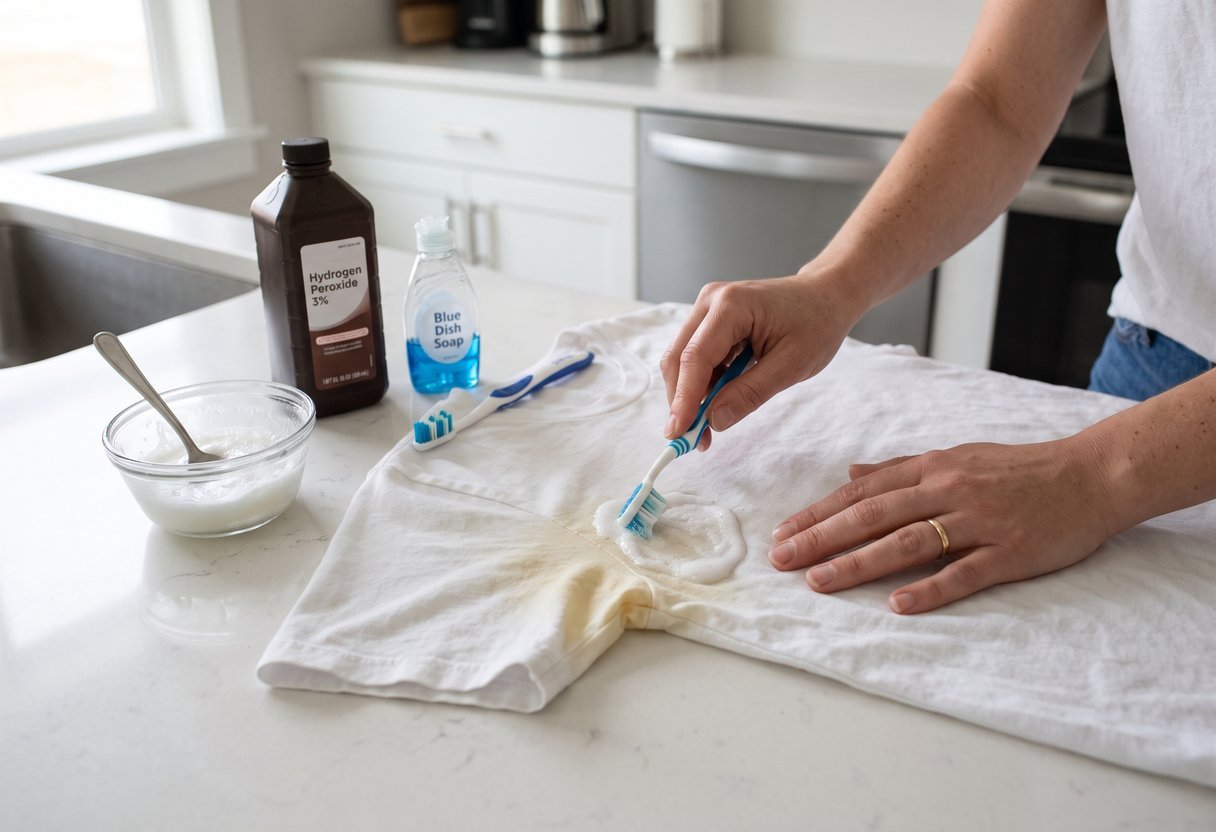
A mixture of hydrogen peroxide and dish soap offers a way to treat yellow underarm stains on white shirts without chlorine bleach or OxiClean. The peroxide helps break down discoloration, while the soap loosens the waxy antiperspirant residue that can hold it in the fabric.
- Putting a damp paper towel over a plate in the microwave, what happens to pizza and pasta after 60 seconds
- Grandma Made Up to Seven Kinds of Pie for Thanksgiving, but Her Granddaughter-in-Law Brought a Cake for a Reason
In a small container, mix 1 tablespoon of dish soap with 2 tablespoons of hydrogen peroxide. For additional gentle scrubbing, stir in 1 tablespoon of baking soda. Apply the mixture generously to the stained underarm area and leave it for 30 to 60 minutes.
If discoloration remains, gently work the treated area with a clean toothbrush. Rinse thoroughly with cold water, then wash the shirt according to its care label. Check the underarm area before drying; if it is still yellow, repeat the treatment rather than drying the shirt with the stain in place.
Sweat and antiperspirant can leave yellow residue
Yellow underarm marks are not simply dried sweat. Proteins in sweat react with aluminum compounds found in many antiperspirants, including aluminum chlorohydrate and aluminum zirconium, and the resulting residue can discolor fabric fibers. Repeated wear gives that residue more opportunities to build up.
This is why treating only surface dirt may not clear an older stain. The soap addresses antiperspirant buildup, while peroxide acts on the discoloration beneath it. Chlorine bleach is a poor choice for this type of stain because it can react with sweat residue and make the yellowing worse.
Fabric care and chemical safety set the limits
Check the care label before treating a shirt, and test the mixture on an inconspicuous spot, especially if the shirt has colored stitching or trim. Scrub gently rather than grinding baking soda into the fibers. A stain that has persisted through repeated washing may need another treatment, and a delicate or dry-clean-only garment is better left to a professional cleaner.
Do not add chlorine bleach to the treatment. Never mix bleach with ammonia or vinegar, because those combinations can release dangerous fumes. The University of Illinois Extension describes an ammonia-and-dishwashing-soap approach for stains, but that is a separate treatment, not an ingredient to add to this peroxide mixture. Keep stain-treatment supplies away from children and pets while working.
Less residue helps prevent new stains
Let deodorant or antiperspirant dry fully before putting on a shirt. This reduces the amount transferred directly to the underarm fabric. An aluminum-free deodorant may also reduce this particular staining reaction, though it will not remove marks already on a shirt.
Wash shirts promptly when underarm residue appears rather than allowing it to accumulate through repeated wears. For an existing mark, start with the measured peroxide and dish soap treatment, then inspect the fabric after washing before deciding whether it needs another round.



Leave a Reply