

Leftovers are waiting in the fridge, and the plastic container seems like the easiest way to heat dinner. But when the microwave starts humming, you may wonder what else is heating up along with your food.
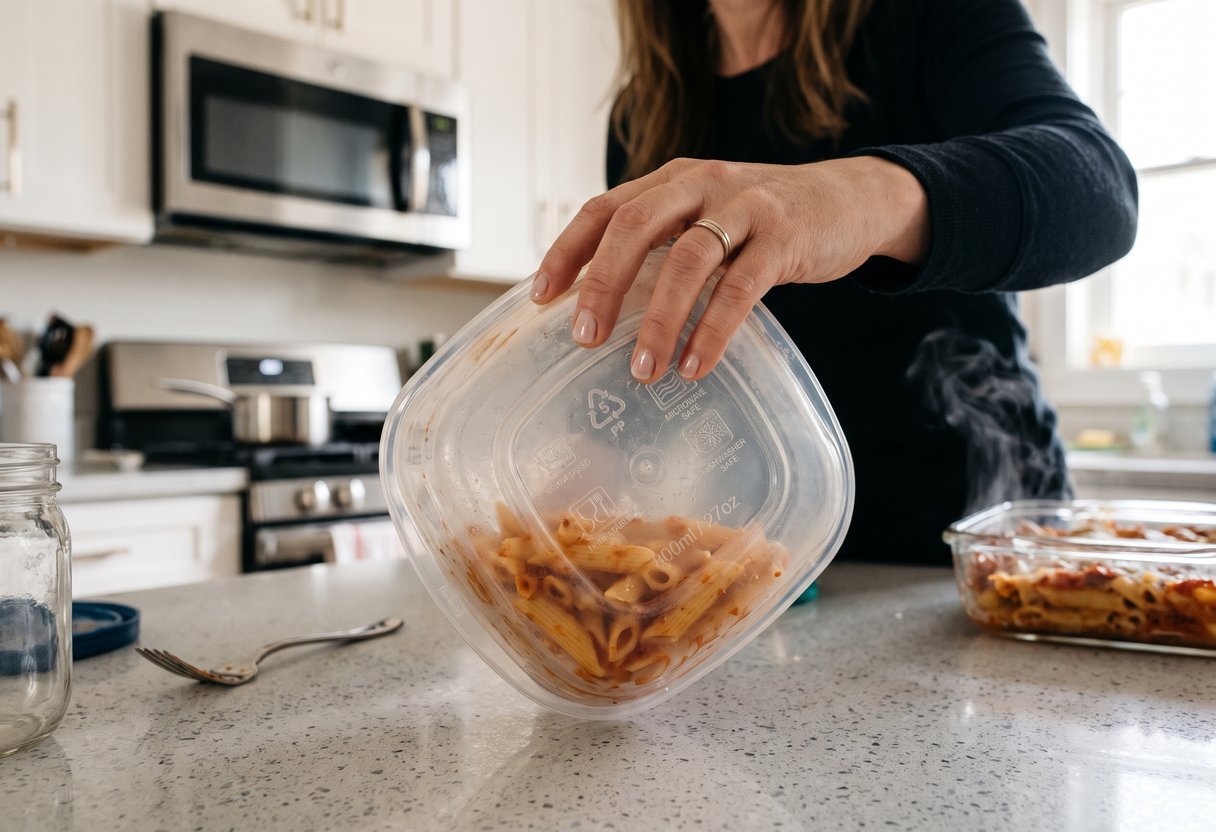
Last night’s pasta is still in its plastic tub when lunchtime rolls around, and microwaving it in the same container seems easier than washing another dish. But a tub that holds cold food may not be made to withstand microwave heat, which can affect the plastic and allow substances to move into the food. A quick check before reheating can help determine whether the container belongs in the microwave.
Microwaving plastic depends on the container
Reheating leftovers in a plastic container is convenient, but not every container is made for microwave heat. Hot food can soften or warp unsuitable plastic, and heat can increase the movement of substances from packaging into food. The useful first check is the container’s microwave-use label, not how sturdy the plastic feels.
- Your Ball jars carry a logo that dates them to the decade, and the blue ones are the ones to check first
- A piece of chalk in the silverware drawer, what it’s for and why it keeps the forks from tarnishing
There is also concern about tiny plastic particles entering food during heating. A microwave-safe label addresses the container’s intended use; it does not mean that no substance or particle can ever transfer. Anyone who prefers to avoid heating food in plastic can use microwave-safe glass or ceramic instead.
A microwave-safe label identifies the intended use
Look for the words “microwave safe,” a microwave symbol, or specific microwave instructions on the container. The FDA evaluates the safety of materials intended to contact food, including how much of a substance may migrate into food under expected conditions of use. A microwave-safe designation means the container is intended to withstand microwave heating when used as directed, not that it is suitable for unlimited heating.
Check the lid separately because it may have different instructions from the base. A recycling number identifies the type of plastic, not whether the finished container can go in a microwave. If the label is missing or unclear, transfer the food rather than guessing.
Single-use and damaged containers need a different dish
Yogurt and margarine tubs are generally made for storing food, not reheating it. Do not microwave takeout containers or other single-use packaging unless they are specifically labeled for microwave use, and follow any limits on the package. Food can become hot enough to deform a container even when the plastic itself does not heat in the same way as the food.
Retire a container from microwave use if it is cracked, warped, melted, or heavily scratched. Damage can make its performance less predictable; Harvard Health notes that older, scratched plastic may release more substances during heating. Move the food to a microwave-safe glass or ceramic dish, and use a microwave-safe cover that allows steam to escape.
Chemical migration and microplastics remain separate concerns
Researchers study whether heating certain plastics increases exposure to chemicals such as BPA or phthalates, which have been examined for possible effects on hormones. That does not mean every plastic food container contains those chemicals. The FDA’s current assessment is that BPA exposure at levels occurring in food is safe, while evaluation of food-contact materials continues.
Studies have also found that some plastics can release microplastics when heated. The FDA says current evidence does not demonstrate that the levels detected in food pose a human health risk, but measurement methods and health effects are still being studied. Choosing glass or ceramic for reheating avoids direct contact between hot food and plastic without relying on an uncertain label.
The container choice does not replace safe reheating
Place leftovers in an appropriate dish, cover loosely, and stir or rotate the food during heating to reduce cold spots. Let it stand briefly, then check the center with a food thermometer: leftovers should reach 165°F (74°C). No fixed microwave time works for every portion or appliance, so temperature is the reliable check.
Open the cover away from the face to avoid hot steam, and keep the hot dish out of children’s reach. When a plastic container’s label or condition is in doubt, transfer the leftovers before turning on the microwave.



Leave a Reply