

You pull out the good silverware for Thanksgiving dinner, only to find the forks looking dull again. Something tucked beside them in the drawer might seem out of place, but its presence isn’t accidental.
A polished serving spoon goes into the drawer looking bright, then develops a dark edge before it is used again. Polishing removes discoloration that is already there, but the chore can return while the silver sits unused. The odd item beside the silverware has a simple reason for being there, though it does not replace proper care.
Chalk can slow tarnish in a silverware drawer
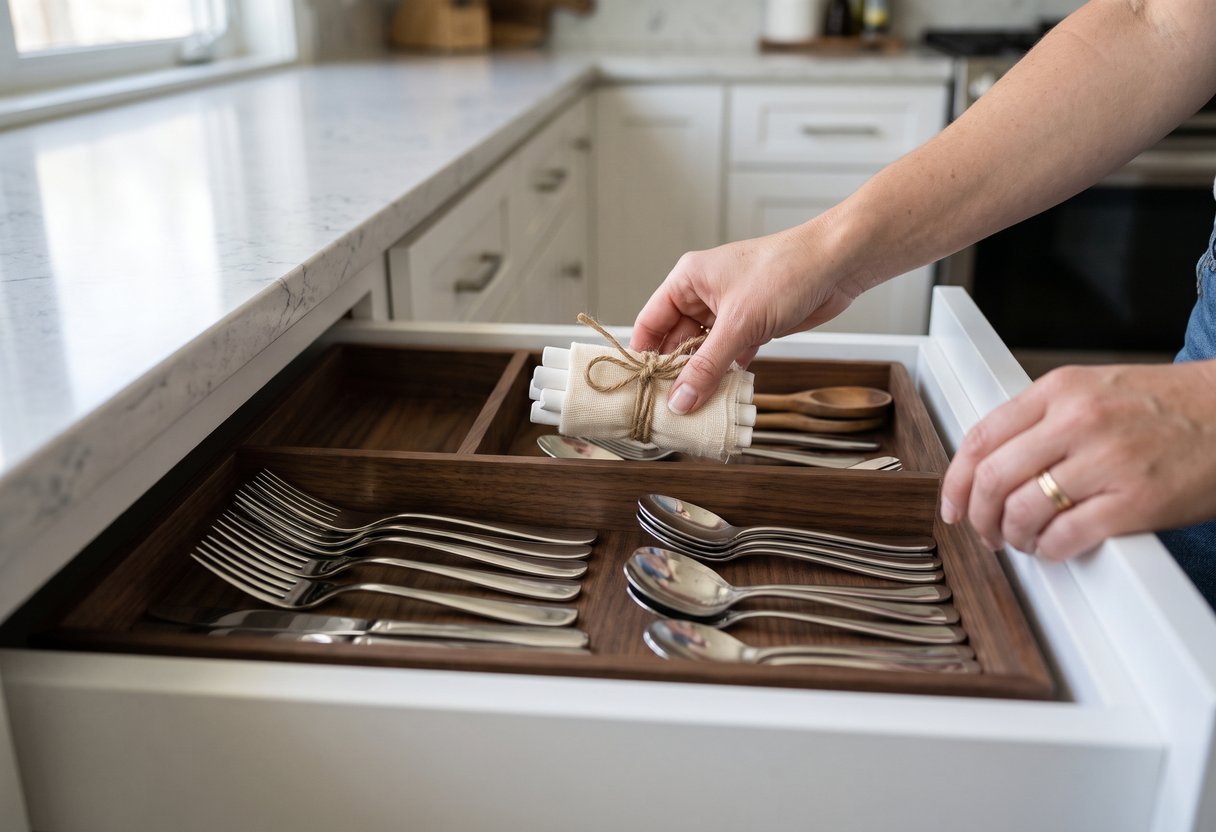
A few pieces of chalk wrapped in cheesecloth can help slow tarnish on stored silverware. Chalk absorbs moisture from the air inside a drawer or storage box, and lower humidity slows the reaction that darkens silver. The cheesecloth keeps chalk dust off utensils while allowing air to reach the chalk.
Wrap a few pieces of chalk in cheesecloth, then place the bundle beside clean, dry silverware in the drawer or storage box. Keep the bundle separate from utensils used for eating, and keep loose chalk out of reach of children and pets. Check the bundle periodically and replace chalk that has become damp or started to crumble.
Silver darkens when it reacts with sulfur compounds
Tarnish is not dirt or rust. It is silver sulfide, a compound that forms when silver reacts with traces of hydrogen sulfide or other sulfur compounds in the air. Sterling silver and other silver alloys can tarnish, and high humidity makes the process faster.
The storage area matters as much as the chalk. Rubber bands, latex gloves, wool, and felt can release sulfur compounds, so they should not sit against stored silverware. Newspaper is also a poor wrapping material because its acidic ink can damage silver.
Clean and dry silverware before putting it away
Eggs, onions, and other foods can leave substances on silverware that encourage tarnish if they remain in contact with it. Wash silverware soon after use with dish soap and warm water, then rinse and dry it thoroughly before storage. Putting damp utensils in a drawer works against the moisture control the chalk is meant to provide.
A plain plastic bag is not necessarily a dry storage solution: air and humidity trapped inside can still allow tarnish to develop. If silverware is stored for long periods, keep the storage area dry and avoid packing it against materials that promote tarnish.
Chalk cannot prevent every tarnish mark
Chalk reduces moisture, but it does not remove every sulfur compound or stop air from reaching silver. Some storage advice suggests chalk may absorb sulfur as well, but moisture control is the main reason to use it. Silver may still darken gradually even in a drawer with chalk.
Treated anti-tarnish cloths or flannel bags and anti-tarnish paper strips offer other storage options. Silica gel packets can also absorb moisture, though they do not replace prompt washing or careful storage. For an everyday drawer, start with clean, completely dry silverware and a contained chalk bundle, then check the silver periodically for tarnish.
Leave a Reply