

Peeling a carrot removes its outer skin, along with much of the visible dirt attached to it. That can make another rinse seem unnecessary, especially when the exposed flesh looks clean. But the peeler touches the unwashed surface before cutting into the carrot, creating an opportunity to transfer dirt and microorganisms onto the part you’re about to eat.
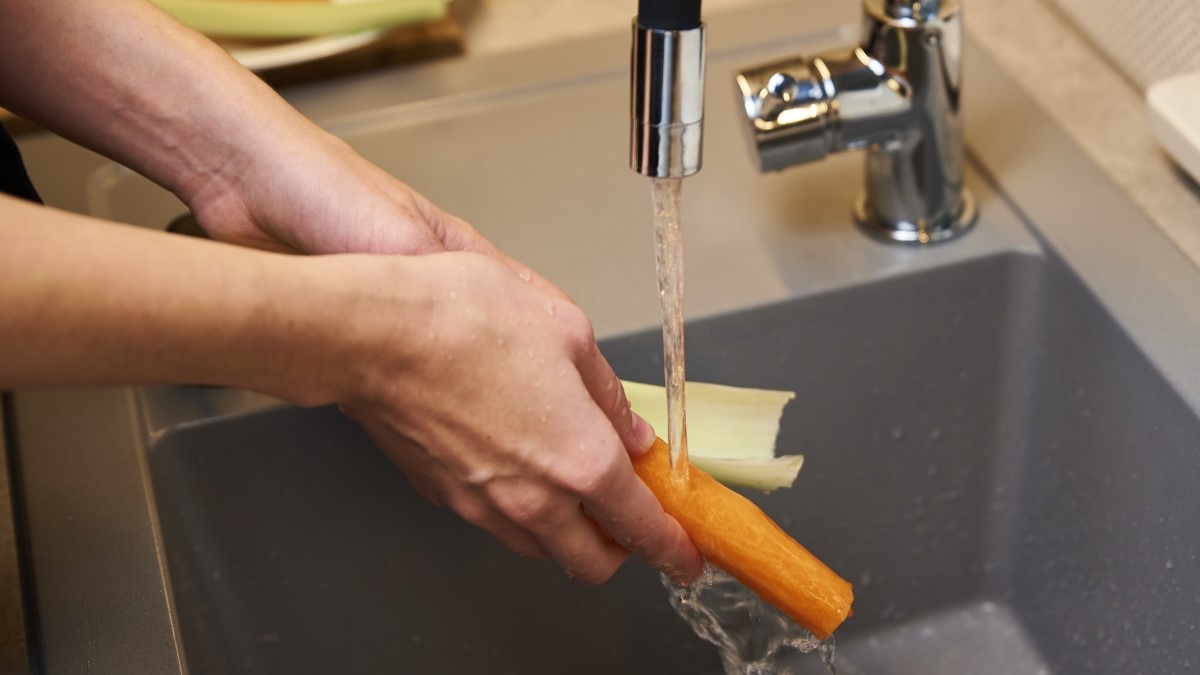
Carrots grow in soil and can carry debris, bacteria, and pesticide residues on their surfaces. Removing the peel doesn’t guarantee that everything on the outside stays away from the flesh, particularly when the same blade passes across both surfaces.
The overlooked step is washing the carrot before peeling, then rinsing the exposed flesh as needed. Cleaning the peeler between carrots also helps prevent residue from moving from one vegetable to another.
The peeler can transfer what’s on the skin
A vegetable peeler makes direct contact with the carrot’s outer surface before exposing the flesh underneath.
If the skin contains soil or microorganisms, some can transfer to the blade and then onto the freshly peeled carrot.
This is why washing carrots before peeling matters, even when the skin will be discarded.
Start by holding each carrot under cold running water and rubbing its surface to remove visible dirt.
Peel the carrot with a clean vegetable peeler, rinsing the tool between carrots to remove residue.
Check for cracks, bruises, or damaged sections and cut away affected areas.
Rinse the peeled carrot if residue remains before slicing, cooking, or serving it.
The goal is to prevent contamination from moving between the skin, kitchen tools, and exposed flesh.
Baking soda and vinegar aren’t required
Plain running water is the recommended starting point for washing fresh produce.
Some household methods involve soaking carrots in diluted baking soda or vinegar solutions.
The expert cited by Simply Recipes describes one teaspoon of baking soda in two cups of cold water, or one part white vinegar to three parts water, as possible additional cleaning methods.
However, research specifically establishing how well these treatments remove pesticide residues from carrots is limited.
Neither method guarantees the removal of all pesticides or microorganisms.
If using either soak, rinse the carrots under running water afterward to remove remaining solution.
Avoid dish soap, detergents, and commercial produce washes that aren’t approved for use on food.
For storage, keep carrots unwashed until needed when possible. Excess moisture left on the surface can encourage deterioration during refrigeration.
Peeling removes the outer layer, but it doesn’t prevent a contaminated blade from contacting the flesh. Washing before peeling, keeping the tool clean, and rinsing away remaining debris address what removing the skin alone can miss.
Leave a Reply