

You reach for a cabinet above the stove and your fingers catch on a stubborn, tacky film. Even after a quick wipe, it still feels grimy, leaving you wondering what you’re missing.
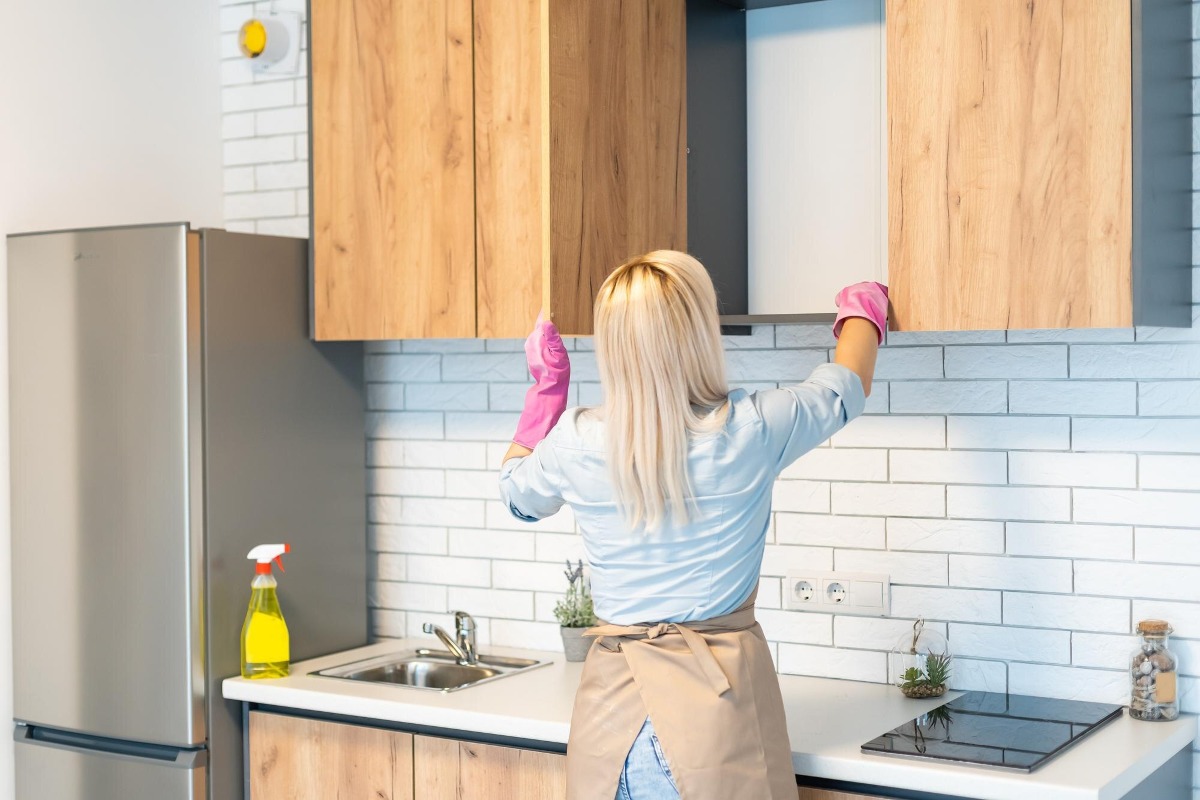
After dinner, a soapy sponge wipes the cabinet door beside the stove, but a dull patch remains when the surface dries. Scrubbing harder may remove visible smudges without clearing the residue underneath. A small change before the usual wash can make the stubborn buildup easier to remove.
The sticky film on cabinets above and beside the stove is cooking grease, not just dust. Heat and rising steam carry tiny droplets of oil onto nearby surfaces, where the oil settles and traps dust and other debris.
- Not bleach and not vinegar, the way to get the brown stains out of a white porcelain sink
- The pink slime on your shower curtain is a bacteria with a name, and the washing machine kills it in one cycle
As the film sits, exposure to heat and air changes the oil. Its fatty acids oxidize and link together, forming a tougher, water-repelling coating. That is why a cabinet can still feel tacky after a quick wipe with water.
Oil can loosen hardened grease before washing
A small amount of clean oil can soften old grease enough to lift it from the cabinet. It works as a pretreatment, not a substitute for washing: oil left on the surface will leave its own residue and attract more dust.
First, test the method on an inconspicuous spot and check for changes to the finish. Lightly dampen a soft cloth with vegetable or mineral oil, then gently rub the sticky area. Let the oil sit for 2 to 3 minutes, wipe away the loosened grime with a clean cloth, and wash the area with a cloth dampened with warm water and dish soap. Finish with a clean, damp cloth to remove soap and residue.
For a stubborn spot on a finish that tolerates gentle abrasion, mix 1 part vegetable oil with 2 parts baking soda and rub the paste lightly with a damp cloth. Test first and skip the paste on painted cabinets, which may scratch or peel.
Dish soap is often enough for lighter grease
Dish soap is a sensible first choice when the buildup has not hardened. Its molecules help grease mix with water so it can be wiped away. Scrub gently with a soft sponge and warm, soapy water, then wipe again with a clean, damp sponge. In a side-by-side comparison of common methods on greasy wood cabinets, dish soap and warm water performed best overall.
White vinegar is another option for a suitable finish: use equal parts vinegar and water, or apply it undiluted and let it sit for 10 to 15 minutes before wiping. Its acidity can help with grease, but test a hidden spot before treating a cabinet. Keep the kitchen ventilated, and never mix vinegar with bleach.
The cabinet finish determines the safer method
For painted cabinets, start with dish soap and water rather than oil, abrasive paste, or harsh solvents. Wood cabinets may also be cleaned with a product intended for wood, such as Murphy Oil Soap, which was introduced in 1910. Whatever the finish, test a hidden area and follow the product’s directions.
If grease remains after gentle cleaning, choose a commercial degreaser labeled for the cabinet’s material and use a soft-bristled brush or sponge only as directed. Persistent buildup on an expensive or specialty finish may call for professional cleaning rather than harder scrubbing. Once the surface is clean, wipe fresh grease away regularly before it hardens into another sticky layer.


Leave a Reply