

You mop the kitchen floor, but by dinner the tiles look dull and your socks pick up grit again. Why does a freshly cleaned floor sometimes seem dirtier than it did before?
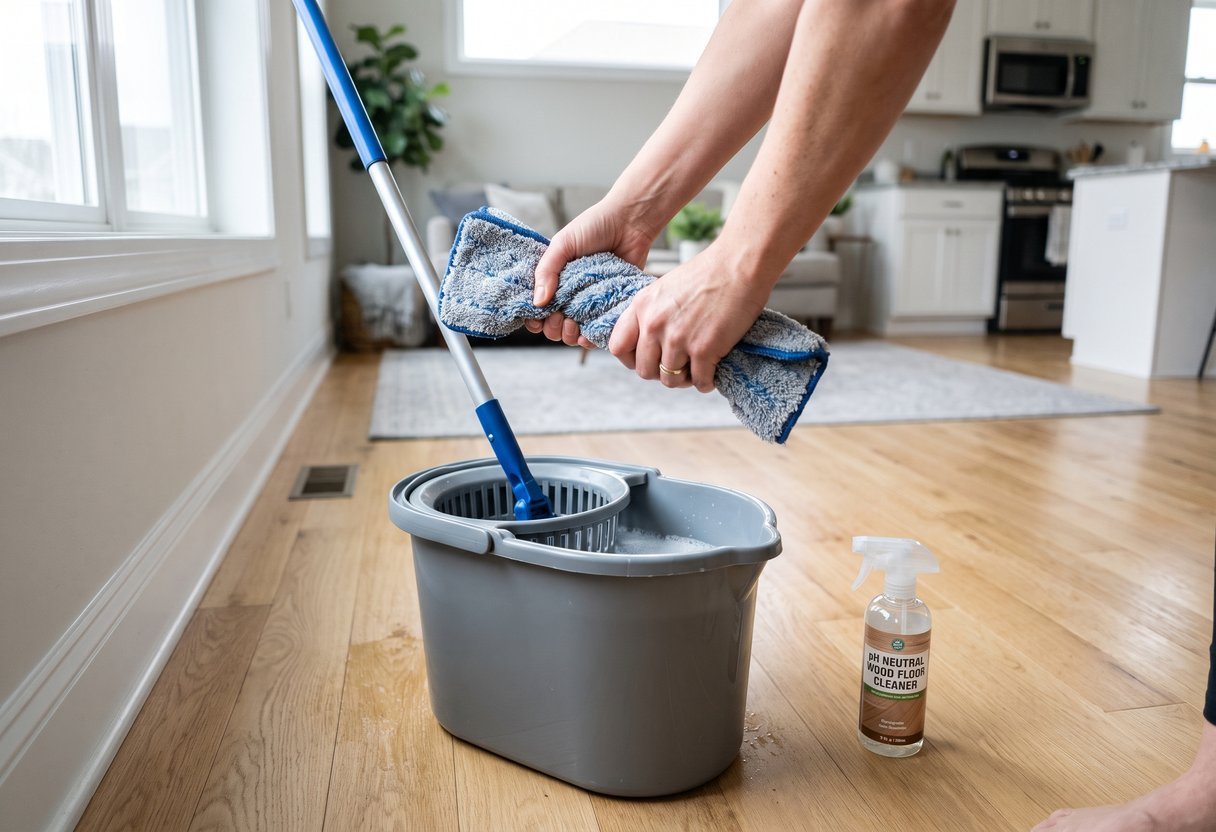
The kitchen floor dries with dull streaks, even though it was just mopped. Adding more cleaner to the bucket will not help if the mop is dragging grit across the surface, and extra water can damage hardwood. A product labeled for floors may not suit every finish, either. Checking the floor maker’s care directions before filling the bucket can prevent damage and point to a better way to clean.
Floor care starts with the manufacturer’s instructions
Before adding anything to mop water, check the flooring manufacturer’s care instructions and the cleaner’s label. A product that removes grime from tile may dull a vinyl finish or leave residue on hardwood. The right method removes tracked-in dirt without exposing the floor to chemicals or moisture it cannot tolerate.
Follow the cleaner’s stated dilution and application directions rather than adding an extra splash to the bucket. Too much cleaner can leave a film that attracts dirt and makes a floor look cloudy. If the floor type or finish is unknown, test an approved cleaner in an inconspicuous spot before cleaning the whole room.
Dry cleaning prevents dirt from spreading
Sweep or vacuum with a floor-safe setting before mopping. Loose grit can scratch a finish, while dust mixed with mop water turns into muddy streaks. Pay attention to edges and high-traffic paths, where debris tends to collect.
A washable microfiber mop picks up fine dirt without requiring a soaked mop head. Rinse or change the pad when it becomes dirty, and wash it after use according to its care label. A loaded pad deposits grime back onto the floor instead of lifting it away.
Hardwood and laminate need very little moisture
For finished hardwood, use a cleaner approved for that floor and a lightly misted microfiber mop. Shaw Floors pH Neutral Cleaner is one option, but its label and the floor manufacturer’s directions still determine whether it is suitable. Wipe up any pooling immediately because water can seep between boards and cause swelling or warping.
Laminate also needs a barely damp, not wet, mop head. Moisture that reaches its fiberboard core can make seams swell, and mopping cannot reverse that damage. Avoid ammonia and oil-based soaps on hardwood finishes, and do not use a steam mop on hardwood or laminate unless the flooring manufacturer explicitly permits it; heat and moisture can reach seams or affect finishes. For stubborn marks, use the floor maker’s spot-cleaning method instead of scrubbing harder.
Tile and vinyl can be cleaned in small sections
For tile or vinyl, choose a cleaner the flooring manufacturer allows. ECOLAB Neutral Floor Cleaner or Zep Neutral pH may be options where their labels permit use; Zep Neutral pH is not for wood floors. A neutral-pH cleaner helps avoid the surface damage some acidic or harsh products can cause, but it is not a substitute for checking compatibility with the specific tile, grout or vinyl finish.
Work across about 4 to 6 tiles at a time so dirty solution can be picked up before it dries into streaks. Rinse or change the mop pad as needed, and leave the area dry rather than letting water sit along seams. “Slop mopping,” which puts down more water before picking it up, is not appropriate for hardwood or laminate and should be used on other floors only if the manufacturer allows that much water.
Safer habits help floors stay clean longer
Skip abrasive tools and unapproved bleach, ammonia or acidic cleaners, which can discolor or damage some surfaces. Never mix bleach with vinegar or ammonia, and keep cleaners and wet floors away from children and pets until the floor is dry. Chair-leg protectors and entryway rugs can reduce scratches and tracked-in grit; the next cleaning still begins with the floor’s care instructions.
Leave a Reply