

Butter can turn brown in a hot skillet before the food has finished cooking. The milk solids begin to scorch, leaving dark specks and a burnt flavor behind. But another cooking fat starts with the same butter and handles higher temperatures without those solids getting in the way.
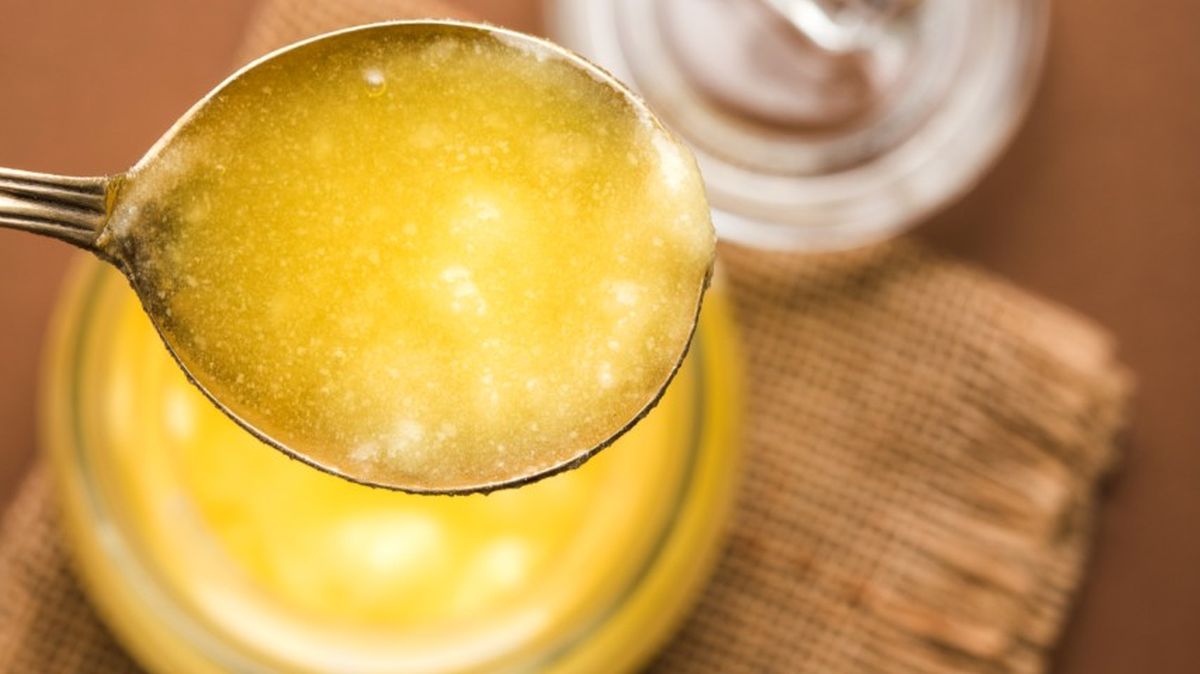
Ghee is made by heating butter until its water evaporates and the milk solids separate from the fat. Removing those components leaves a golden cooking fat with a rich, nutty flavor and a higher smoke point than ordinary butter.
The difference matters when searing meat, frying vegetables, or preparing dishes that need sustained heat. Ghee retains much of butter’s richness without the same tendency for milk solids to burn.
Removing the milk solids changes how butter cooks
Regular butter contains roughly 80–82% fat, with the remainder consisting of water and milk solids.
When butter heats, the water begins evaporating while the milk proteins and sugars can brown and eventually burn.
Ghee undergoes a heating process that removes water and separates the milk solids, leaving concentrated butterfat.
The process also develops its characteristic nutty flavor, distinguishing it from plain melted butter.
Without those milk solids, ghee can tolerate higher cooking temperatures before smoking.
Its smoke point is often reported around 485°F (252°C), although the exact temperature varies by product and processing method.
That makes it suitable for sautéing, frying, and searing foods that require more heat than regular butter can handle without scorching.
Ghee can replace butter in more than a frying pan
Ghee has long been used in Indian cooking, where its rich flavor works with rice, vegetables, spices, and meat.
A small amount can be added to a hot skillet before cooking vegetables or used to finish rice and quinoa.
It can also replace butter in some baking recipes, contributing fat and a subtle toasted flavor.
However, because ghee contains less water than ordinary butter, substituting it in baking can change the finished texture. Recipes designed for ghee provide more predictable results.
Despite its cooking advantages, ghee isn’t automatically a healthier alternative to butter.
Both contain substantial amounts of saturated fat, and the source’s suggested benefits for gut health, immunity, and heart health don’t establish that replacing butter with ghee improves those outcomes.
The reason to choose ghee is more straightforward: removing water and milk solids changes how butter responds to heat, leaving a cooking fat that offers buttery richness with greater resistance to scorching.
Leave a Reply