

You reach for the salt while pasta water heats, then notice tiny marks inside your stainless steel pot. Could the moment you season the water have something to do with them?
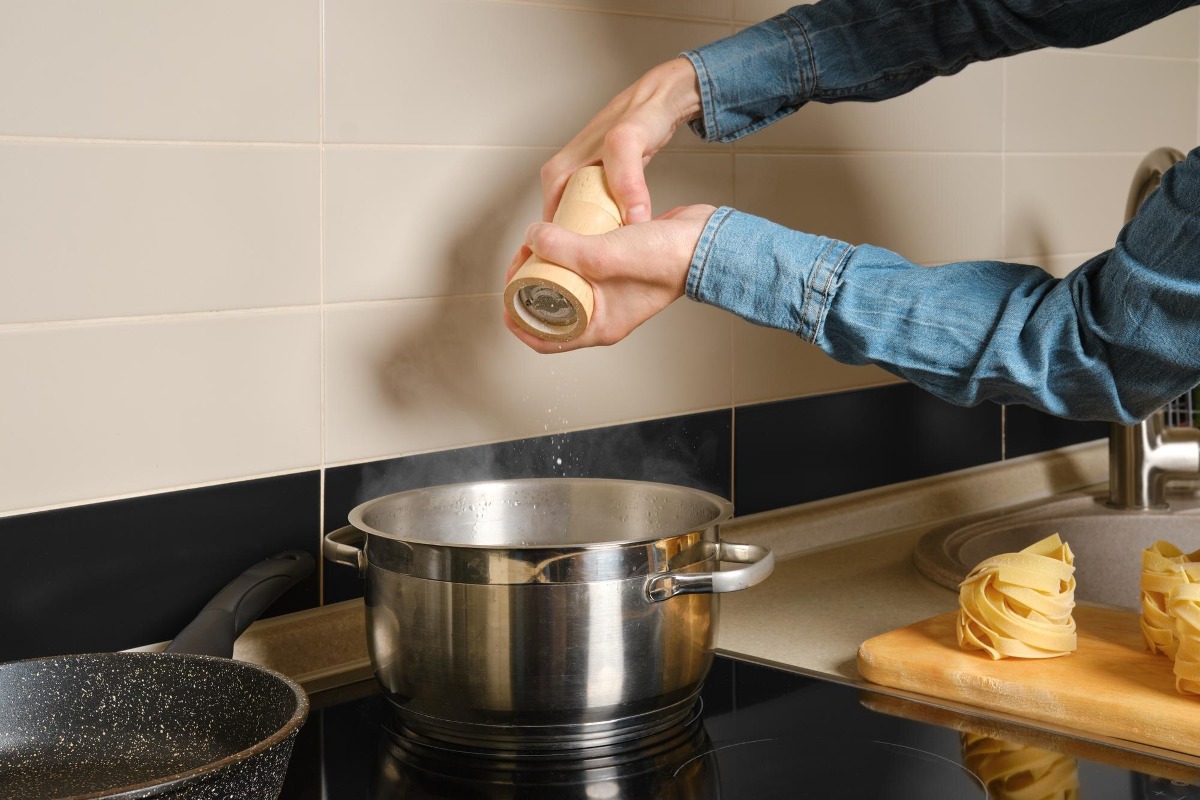
At cleanup, a sponge slides over a stubborn speck at the bottom of a stainless steel pot. Extra scrubbing can remove residue, but some marks will not wash away. A small choice during cooking may help protect the pot’s appearance, even though the marks generally do not affect how it cooks.
Salt stainless steel cooking water after it boils
For a stainless steel pot, bring the water to a full boil before adding salt. This helps protect the pot’s surface because salt disperses quickly in boiling water instead of sitting as undissolved crystals against the metal. Stir well after adding the amount of salt the recipe calls for.
- Neither vinegar nor lemon, the way to get the fish smell out of your kitchen by the next morning
- Your can of pumpkin pie filling and your can of pumpkin purée aren’t the same thing, and the label shows it in one line
The timing matters most when salt is added directly to water in a stainless steel pot. Sprinkling salt into a dry stainless steel pan also leaves crystals in direct contact with the surface, so wait until heated food or liquid is in the pan before seasoning.
Salt pitting leaves permanent marks
Stainless steel has a thin protective layer of chromium oxide. Chloride from salt can contribute to a localized breakdown of that layer, causing pitting in stainless steel. When salt is added to water that has not yet boiled, undissolved crystals may settle on the bottom of the pot and remain there as the metal heats.
True pits look like tiny, dark craters and do not wipe away. All-Clad describes salt pitting in its stainless steel cookware as cosmetic: it can change the pan’s appearance without interfering with its cooking performance. Unlike a surface stain, a pit is damage to the metal and cannot be cleaned off.
Stirring matters when a recipe calls for early seasoning
For pasta, bring the water to a vigorous boil, add the recipe’s salt, and stir until the crystals have dispersed before adding the pasta. Cooking writer Marcella Hazan also recommended salting pasta water after it reaches a boil. The point for the pot is to avoid leaving a concentrated patch of undissolved salt on its bottom.
Some recipes call for salt in a liquid before it boils. In that case, stir thoroughly as soon as the salt goes in and check that no crystals remain on the bottom; do not leave them sitting while the pot heats. The boil-first precaution addresses salt pitting in stainless steel, not an equivalent rule for aluminum, enameled, or nonstick cookware.
White spots may be removable mineral deposits
Chalky white spots after boiling water may be calcium and magnesium deposits from hard water rather than pits. Wipe a spot with white vinegar and give it about 1 minute: mineral residue can come off, while a crater will remain. Rainbow discoloration is also different from the small, permanent craters caused by pitting.
Rinse the pot after using vinegar, and follow the cookware maker’s care instructions if marks remain. Never mix vinegar with bleach, and keep cleaning products away from children and pets. For the next pot of pasta, the simplest precaution is to let the water boil before adding salt, then stir it in.
Leave a Reply