

You change the sheets and notice yellow patches on pillows that used to look white. They seem ready for the trash, but are those stains really the end of the story?
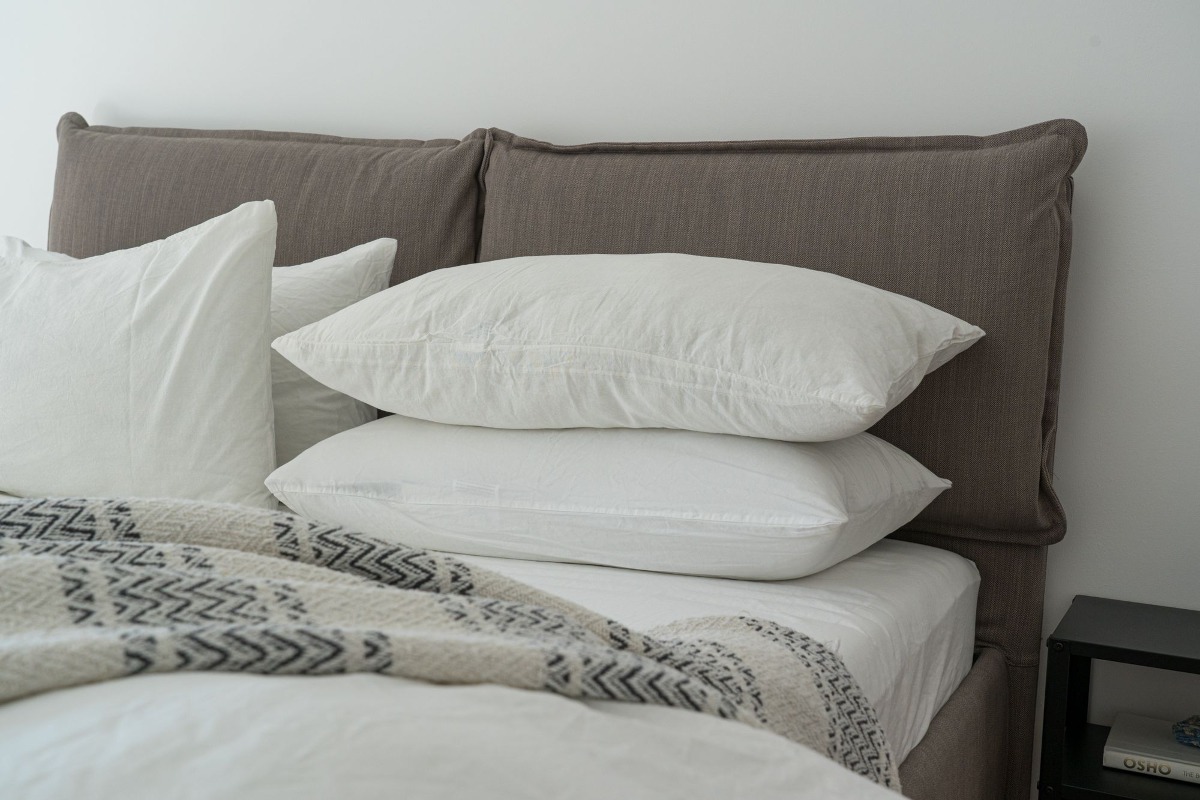
A damp cloth picks up a little grime from a pillow, but the yellow cast remains after the fabric dries. Wiping the surface cannot reach buildup that has worked into the pillow, so more scrubbing may make little difference. Before replacing it, check the care label: it may allow a more thorough cleaning, but the wrong method can damage the filling.
A hot wash can whiten some yellowed pillows
A hot wash with detergent and borax can reduce yellowing on machine-washable pillows when the care label permits hot water. The cleaning agents help lift body oils from the fabric and fill; hot water alone is less likely to do the job. This method is for washable down, feather, or polyester pillows, not memory foam.
- Appliance techs check one spot first when a front-load washer smells, and it’s the fold in the rubber seal
- Neither a razor blade nor baking soda, the way to get the burnt rings off a glass stovetop for good
Check the pillow’s care label before starting. Use the hottest setting it allows, rather than assuming every pillow can take a hot cycle. Heat can shrink some fabrics, damage delicate synthetic materials, or make down clusters clump.
Body oils and moisture cause yellowing
Sweat, skin oils, drool, and residue from hair and skin care products pass through a pillowcase over time. As these substances collect and oxidize, they darken the fabric and fill. A fresh pillowcase may hide the stains, but it does not remove buildup inside the pillow.
A pillow protector adds a barrier between the pillowcase and the pillow, especially when pillowcases are changed infrequently. Washing washable pillows about every 3 to 6 months helps remove accumulated sweat and skin cells before staining becomes harder to treat.
Dissolve the cleaners before the wash cycle
For a pillow approved for hot-water washing, dissolve 1 cup powdered laundry detergent, 1 cup powdered dishwasher detergent, and 1 cup borax in 1 gallon of hot water, stirring until no powder remains. Add the solution to enough hot water in a basin to cover the pillow, then soak it until the fabric and fill are thoroughly wet. Keep the solution away from children and pets.
Move 2 pillows into the washer together to help balance the drum. Run a gentle cycle with the hottest water the labels permit, then rinse thoroughly so cleaning residue does not remain against the skin. Dry the pillows completely on the low or medium setting allowed by the labels; dryer balls or clean tennis balls can help keep the fill from settling into clumps.
Other stains and pillow types need different care
Do not use hot water on blood stains. Start with cold water instead, because heat can set protein-based stains. If yellowing remains after a thorough wash and dry, another hot cycle may not restore the original color.
Memory foam and pillows marked non-machine-washable should not be soaked or put through this cycle. Follow the label and spot-clean surface stains with a little warm water and liquid dish soap, or use 3% hydrogen peroxide on a small test area first. Peroxide can fade some fabrics; keep it separate from the borax wash solution, and never mix bleach with vinegar or ammonia.
If a pillow still smells after it is completely dry, or its fill remains damaged or clumped, replace it rather than washing it again. For a pillow that can be washed, let the care label set the water temperature and drying method before reaching for the cleaning solution.
Leave a Reply