

After dinner, you flip over your stainless steel skillet and find a blackened bottom that won’t budge with ordinary washing. Why does this stubborn mess seem so much harder to remove than the food inside?
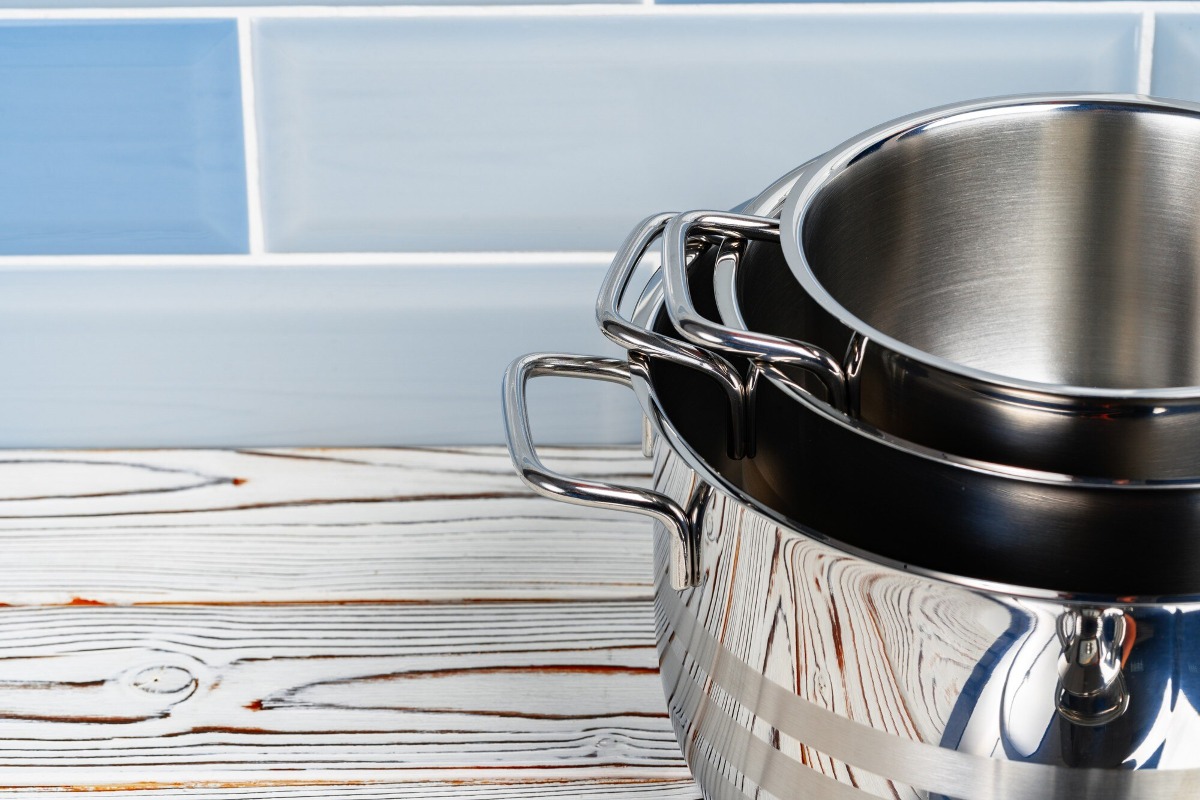
At the sink, a sponge drags across a dark ring on the underside of a pan, but the ring stays put. Steel wool may seem like the next step, yet its fibers can scratch stainless steel without fully removing the buildup. A simple option from the cleaning aisle offers another approach without harder scrubbing.
Bar Keepers Friend cleans burnt stainless steel without steel wool
Bar Keepers Friend Cookware Cleanser & Polish is an alternative to steel wool for black residue on the bottom of a stainless steel pan. It helps loosen stubborn deposits so they can be wiped away with a soft cloth instead of scraped off with metal filaments. The dark layer forms when food or oil burns onto the pan, and it can take more than 1 cleaning pass to remove.
- Neither bleach nor baking soda, the way to get the yellow off a white plastic microwave handle and fridge door
- Neither oven cleaner nor steel wool, the two-ingredient paste that lifts the brown off old baking sheets
The cleanser contains oxalic acid, which helps break down stains such as rust and mineral deposits. Burnt residue still needs gentle rubbing; the cleaner does not make thick buildup disappear on contact. Its main advantage here is that cleaning does not have to rely on aggressive scrubbing that scratches the pan.
Steel wool can make future cleaning harder
Steel wool removes residue by abrasion, but its metal filaments can leave deep scratches in stainless steel. A scratched bottom may look dull, and its rougher surface can give future grime more places to cling. Pressing harder is not a reliable fix if burnt material remains after the surface has been scratched.
A soft, wet cloth or non-abrasive sponge is a better first choice. If a pan has a coating or an unusually polished finish, check the cookware maker’s care instructions before using a cleanser intended for stainless steel. Cleaning away a stain is not worth damaging a coating or changing a finish.
A short application protects the pan’s finish
Let the pan cool before cleaning it. Wet the burnt area, then sprinkle about 1 tablespoon of Bar Keepers Friend Cookware Cleanser & Polish over the damp surface. Add about 1 teaspoon of water if needed to make a spreadable paste, and rub gently in small circles with a soft, wet cloth or non-abrasive sponge.
Rinse thoroughly within 1 minute of applying the cleanser, then wipe the pan dry. Although a longer paste treatment is sometimes suggested for burnt pans, the manufacturer’s instructions for Cookware Cleanser & Polish call for rinsing within a minute. For residue that remains, use another short application rather than leaving the first one on the metal.
Some stains need another approach
Wear gloves, avoid getting the cleanser in the eyes, and keep the powder away from children and pets. It is harmful if swallowed. Do not mix it with chlorine bleach or other cleaning chemicals; use water alone for application and rinsing.
If several gentle passes leave a thick, hard layer, stop rather than switching to steel wool or scrubbing harder. Wash the pan with warm, soapy water and a soft sponge, then consult the cookware maker’s care instructions for persistent buildup. Dry the clean pan promptly to reduce water spots.
Leave a Reply